Keep
Preserving useful locations can focus the work. It still requires verification of existing condition and proposed products.
Plan a kitchenDecision guide
The best scope solves the right problem. Start by separating appearance, daily function, and underlying conditions.
| Scope | A useful fit when… | Confirm before choosing |
|---|---|---|
| Finish refresh | The room works and sound elements can remain. | Condition, compatibility, preparation, and whether the proposed changes address the real problem. |
| Retained-layout remodel | Fixtures generally work where they are, but key components need replacement. | Actual dimensions, systems, concealed conditions, and installation needs. |
| Layout change | Movement, storage, or fixture placement is the main constraint. | Technical feasibility, affected structure and services, coordination, and approvals. |
| Assessment and recovery | Damage or incomplete work creates uncertainty. | The source, safety concerns, records, previous work, and prerequisites for reconstruction. |
Preserving useful locations can focus the work. It still requires verification of existing condition and proposed products.
Plan a kitchenChanging locations may solve an enduring use problem. Ask what additional trades, investigation, and approvals it brings.
Plan a bathroomA room with unresolved damage or unknown work needs a reliable starting point before choosing its final scope.
Plan the recovery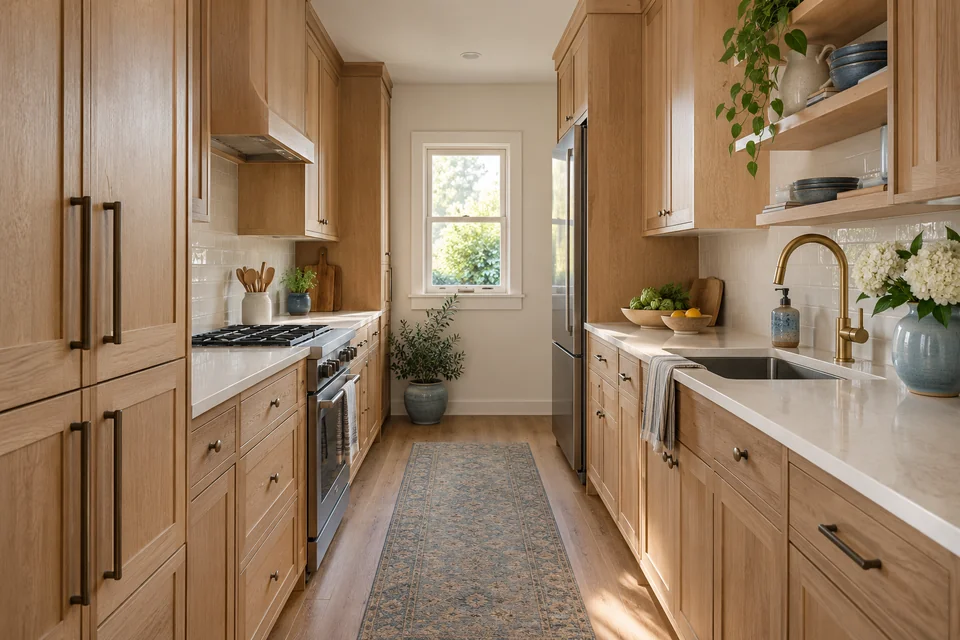
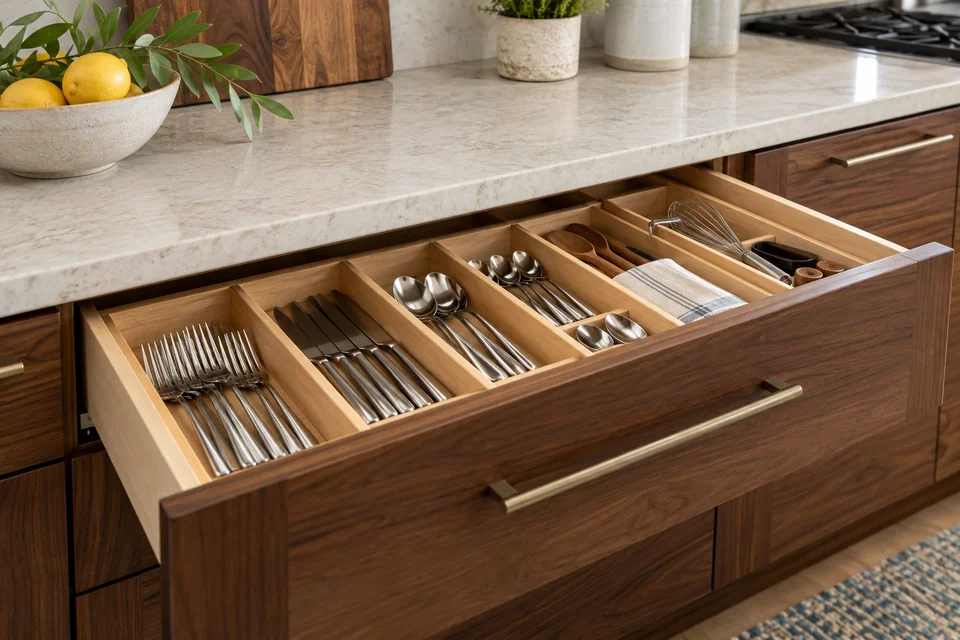
Situation: the footprint is useful, but everyday items are hard to reach.
Scope consideration: investigate cabinet condition and consider more useful storage before assuming walls or major fixtures need to move.
Intended result: easier organization within the existing room. This is a design example, not a completed project or guaranteed outcome.